
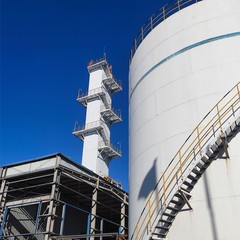
Large Scale Cryogenic Air Separation Unit (ASU)


Comprehensive Engineering, Procurement, and Technical Guide
A Large Scale Cryogenic Air Separation Unit (ASU) is a heavy-duty, engineered industrial process plant designed to produce high-purity oxygen, nitrogen, and argon in high volumes from atmospheric air. These units are specified for continuous industrial operations where gas demand exceeds the capacity, reliability, or purity limits of packaged PSA, VPSA, or membrane systems.
Final plant configuration, equipment sizing, and capital investment are determined by required gas capacity, product purity, delivery pressure, product state (gaseous or liquid), operating profile, and site utilities.


What Does a Large Scale ASU Do?

An ASU separates atmospheric air into its primary elemental components using low-temperature (cryogenic) distillation. The standard process sequence follows a strict operational flow:
Atmospheric Air -> Air Compression -> Pre-Purification -> Cryogenic Cooling -> Distillation -> Product Conditioning -> Delivery

Air Compression

Incoming atmospheric air is compressed to the operating pressure required by the separation process. This section directly influences overall power consumption, throughput, and system stability.

01

Air Purification

Pre-Purification Units (PPU) utilize molecular sieves to remove water vapor, carbon dioxide, and hydrocarbons that could freeze or accumulate at cryogenic temperatures.

02

Main Heat Exchange

Purified compressed air is cooled against returning product streams in high-efficiency plate-fin heat exchangers, establishing the thermal balance of the plant.

03

Cryogenic Separation

The cooled air enters multi-stage distillation columns where oxygen, nitrogen, and argon are separated based on their boiling point differences.

04

Product Recovery & Delivery

Separated gases or liquids are conditioned to precise pressure and purity specifications for pipeline transport or cryogenic storage.

05


Core Industrial Products & Applications

Oxygen Production

Supplied for continuous, high-volume industrial operations requiring high purity.
Key Applications: Basic oxygen steelmaking (BOF/EAF), non-ferrous metallurgy, chemical oxidation processes, and regional industrial gas networks.
Procurement Focus: Flow rate, oxygen purity (typically 95% to 99.6%), and delivery pressure.

Nitrogen Production

Utilized extensively for plant safety, inerting, and process protection.
Key Applications: Chemical and petrochemical processing, refinery safety purges, storage tank blanketing, and heat treatment atmospheres.
Procurement Focus: Volume demand, dew point, and purity specifications (up to ultra-high purity / <1 ppm O2).

Argon Production

Integrated into the cryogenic section when high-purity argon is demanded by downstream metallurgical processes.
Key Applications: Specialty steel refining (AOD/VOD processes), secondary metallurgy, and high-grade welding shielding gases.
Procurement Focus: Crude vs. refined argon recovery targets and multi-product balancing.


Key Technical Parameters for Procurement

To secure a commercially viable and technically sound installation, engineering and procurement teams should specify the following parameters:


Disaggregated Gas Capacity: State production rates separately for oxygen, nitrogen, and argon. A single aggregate ASU capacity figure is insufficient for technical comparison.


Product Purity & State: Explicitly define purity limits alongside delivery phase (gaseous, liquid, or mixed mode).


Power Consumption (Specific Energy): Because electricity represents the primary OPEX driver, evaluate power consumption under guaranteed operating baselines.


Operating Flexibility & Turndown: Define minimum stable load, normal operating load, peak capacity, and purity maintenance during load swings.


Product Recovery Efficiency: Establish recovery targets for oxygen, argon, and nitrogen to optimize life-cycle economics.

Full Distillation Argon Air Separation Equipment


Oversized Air Separation Unit for Coal Chemical


Cold Box and Cryogenic Equipment Scope

The cold box houses the core low-temperature equipment under high-vacuum or perlite insulation. Key components include:
Cryogenic distillation columns
Main plate-fin heat exchangers
Expansion turbines (providing refrigeration)
Low-temperature piping and cryogenic valves
Specialized thermal insulation and instrumentation
Material selection, thermal design, and mechanical integrity of the cold box are critical to long-term, uninterrupted plant operation.


Automation and Process Control

A large ASU requires highly coordinated control across compression, purification, refrigeration, distillation, and delivery.

Monitored Variables

Pressure, temperature, flow rates, liquid levels, product purity, and compressor/expander operating conditions.

Plant Integration

Interfaces seamlessly with the facility's DCS or SCADA architecture through defined communication protocols and robust emergency trip (ESD) systems.


Manufacturing and Quality Control Standards


For a capital-scale ASU project, procurement evaluation should review comprehensive manufacturing documentation, including:
Process design calculations and equipment datasheets
Material Test Reports (MTRs) and traceability records
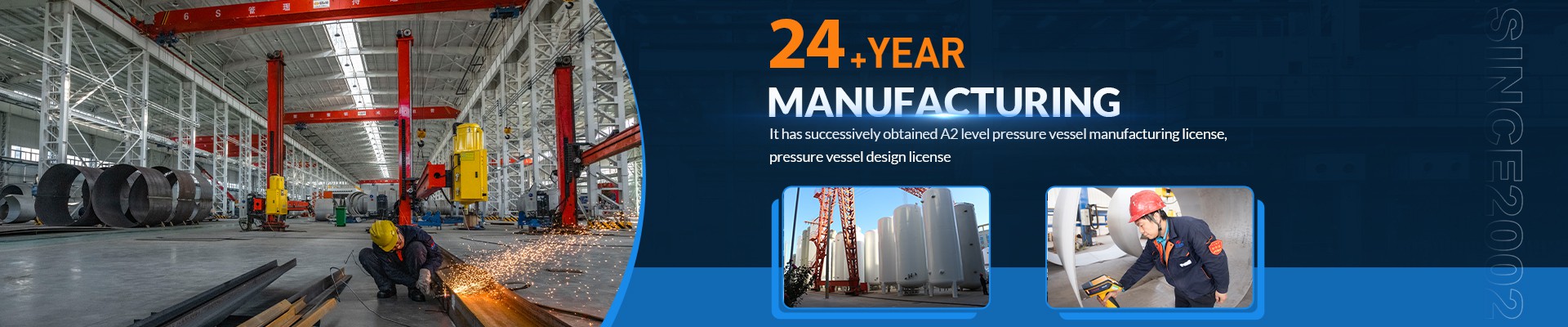
Welding procedure specifications (WPS/PQR) and non-destructive testing (NDT) reports
Pressure vessel compliance codes (such as ASME, PED, or equivalent international standards)
Factory Acceptance Testing (FAT) records for control systems and instrumentation


Frequently Asked Questions


Q: Is a large ASU suitable for oxygen production only?

A: Not necessarily. An ASU can be configured for single, dual, or triple product generation (oxygen, nitrogen, and argon) depending on project requirements.

Q: Can a large ASU produce both gaseous and liquid products?

A: Yes. Liquid storage systems and sub-cooling circuits can be integrated to produce liquid oxygen, nitrogen, and argon alongside gaseous pipeline supply.

Q: How important is power consumption during supplier evaluation?

A: Extremely important. Electricity represents the largest operating cost (OPEX) over the plant's lifecycle. Bids should be evaluated based on specific energy consumption under identical operating conditions.

Q: What is included in a standard ASU supply boundary?

A: Scope varies by contract but typically spans from air compression and purification to the cold box, product compression, instrumentation, control systems, and commissioning support. A clear battery-limit definition is essential.

As one of the leading large scale air separation unit manufacturers and suppliers in China, we also support customized service. Please feel free to buy high quality large scale air separation unit for sale here from our factory. Contact us for more details.

large scale air separation unit, Oversized Air Separation Unit for Coal Chemical, Large scale Air Separation Unit for Steel Mill

Send Inquiry