
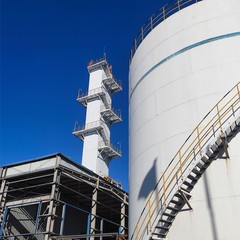
What Is Liquefying Storage Equipment?


Cryogenic storage equipment maintains liquefied industrial gases and process media in a controlled low-temperature state while managing pressure rise, heat ingress, liquid transfer, and vapor handling. Depending on project requirements, equipment can be supplied as a standalone cryogenic storage vessel or integrated into a comprehensive storage and transfer facility.

 
  • Food-grade CO₂ Liquefaction Equipment

    The food grade CO₂ liquefaction device is a specialized equipment that converts high-purity CO₂ gas purified by front-end purification into low-temperature liquid products through refrigeration and

  • CO₂ Cylinder Filling Unit

    The CO₂ gas cylinder filling unit is a specialized system that fills liquid carbon dioxide from liquefaction equipment or storage tanks into standard high-pressure steel cylinders or welded insulated

  • Polyurethane Foam Insulated LCO₂ Storage Tank

    Polyurethane foam thermal insulation LCO₂ (liquid carbon dioxide) storage tank is an atmospheric/low-pressure low-temperature storage tank that uses rigid polyurethane foam to cast on site or spray

  • Vacuum Insulated LCO₂ Storage Tank

    The vacuum-insulated LCO₂ storage tank is a core piece of equipment for cryogenic liquid storage, utilizing either high-vacuum multilayer insulation or vacuum powder insulation technology.

 
Core Engineering Specifications & Parameters


Storage Medium & Purity

Compatibility with specific fluid characteristics and cleanliness standards.


Storage Capacity

Defined working volume, maximum inventory, and reserve requirements.


Pressure Specifications

Working pressure, maximum allowable working pressure (MAWP), and design pressure.


Temperature Parameters

Normal operating and extreme design temperatures.


Insulation & Thermal Control

Minimization of heat ingress to ensure pressure stability.


Process Connections

Inlet, outlet, vapor return, drain, and instrumentation interfaces.


Safety & Relief

Pressure relief protection and emergency venting configurations.


Monitoring & Control

Liquid level, pressure, temperature, and vacuum measurement devices.


Typical Liquefied Media

Equipment configuration varies significantly based on the chemical and physical properties of the stored fluid:


Liquid Oxygen (LOX): Requires strict material compatibility, specialized cleanliness procedures, oil-free components, and dedicated oxygen-service protocols.


Liquid Nitrogen (LIN): Utilized widely across industrial gas supply, process cooling, electronics manufacturing, and food processing, configured based on consumption rates and vaporization needs.

Liquid Argon (LAr)

Deployed for high-volume or continuous argon supply under cryogenic conditions with specialized liquid transfer setups.

Liquid Carbon Dioxide (CO_2)

Differs from atmospheric cryogenic storage due to unique phase-equilibrium and pressure characteristics, requiring tailored pressure and temperature control strategies.

LNG & Other Cryogenic Liquids

Demands medium-specific engineering reviews addressing fluid properties, required inventory, site safety regulations, and boil-off gas management.


Product Selection and Technical Parameters


Procurement teams can streamline technical evaluation and reduce clarification cycles by defining complete process parameters at the RFQ stage.


Selection Item

Technical Specifications & Parameters Required

Storage Medium

Oxygen, nitrogen, argon, $CO_2$, LNG, or specialized process media

Storage Capacity

Required working volume and operational inventory limits

Pressure Ratings

Normal operating pressure range and vessel design pressure

Temperature Range

Normal and extreme design temperatures

Orientation

Vertical, horizontal, or project-specific skid arrangement

Insulation System

Vacuum insulation configuration or specialized thermal jacketing

Process Interfaces

Inlet, outlet, vapor, drain, and instrumentation connection sizes

Site Conditions

Ambient temperatures, seismic zone, elevation, and installation environment

Inspection Scope

NDE, pressure testing, vacuum testing, and quality verification


Working Volume vs. Total Vessel Volume

Sizing should prioritize operational inventory requirements over nominal tank capacities:
Required working liquid volume
Maximum allowable filling level and inventory reserve
Minimum operating inventory and autonomy requirements
Filling frequency and expected daily consumption rates
Liquid expansion coefficients under varying pressure conditions

CO₂ Cylinder Filling Unit


Polyurethane Foam Insulated LCO₂ Storage Tank


Pressure and Temperature Design

Pressure and temperature are tightly coupled in cryogenic systems. Equipment configurations must account for:
Normal operating pressures and pressure spikes during idle periods
Filling, unloading, and flashing conditions
Vapor generation rates and relief valve sizing
Minimum credible operating temperatures tied directly to the stored medium


Insulation and Heat-Leak Control


Heat ingress drives liquid evaporation and pressure accumulation. Vacuum-insulated vessels require rigorous long-term vacuum integrity and careful selection of insulation materials based on storage duration, allowable heat leak, and maintenance considerations.


Main Equipment Configuration


Storage Vessel

Primary pressure-containing shell built to withstand cryogenic temperatures and design pressures.

01

Insulation System

Advanced vacuum or multi-layer thermal insulation to minimize ambient heat transfer.

02

Process Piping

Optimized piping loops for filling, withdrawal, vapor management, and process integration.

03

Valves and Safety Devices

Precision-engineered isolation valves, check valves, and dual pressure-relief mechanisms.

04

Instrumentation

Liquid level gauges, pressure transducers, temperature sensors, and differential pressure transmitters.

05


Manufacturing and Quality Control

Long-term reliability in cryogenic service depends heavily on strict quality assurance protocols:

Material Control

Full material traceability and verification, particularly for components exposed to cryogenic temperatures.

Welding & NDE

Controlled welding procedures performed by qualified personnel, supported by visual examination and non-destructive examination (NDE) of critical joints.

Pressure & Leak Testing

Hydrostatic or pneumatic pressure testing alongside vacuum decay and helium leak testing for vacuum-insulated systems.

Final Inspection

Comprehensive verification of dimensional tolerances, nozzle orientations, surface finishes, instrument interfaces, and documentation completeness.


Typical Applications

Industrial Gas Supply: Bulk storage of liquid oxygen, nitrogen, and argon prior to vaporization and pipeline distribution.


Air Separation Units (ASU): Product inventory management, peak-shaving, and emergency backup supply.


LNG Facilities: Liquefied natural gas storage, transfer, and send-out terminals.


Chemical and Process Plants: Feedstock storage and utility gas management for continuous industrial operations.


Gasification Stations: Cryogenic liquid storage coupled with ambient or forced-draft vaporizers for continuous gas distribution.

Food-grade CO₂ Liquefaction Equipment


Custom Liquefaction Storage Equipment


Customized configurations are engineered when standard designs do not align with operational parameters:
Non-standard storage volumes or footprint constraints
Specialized media requiring unique cleanliness or material grades
Custom operating pressures or specialized connection layouts
Integration into existing plant piping and control systems
Specific regional regulatory compliance or customized inspection requirements


Procurement Checklist for RFQ Submission

To receive an accurate technical quotation, prepare the following specifications and parameters:

Stored medium chemical name and purity

Required working volume and total capacity

Operating pressure and design pressure limits

Operating temperature and design temperature limits

Installation orientation (vertical or horizontal)

Insulation and vacuum performance requirements

Process connection sizes and flange ratings

Inspection, NDE, and testing requirements

Site limitations, transportation dimensions, and lifting constraints


FAQ


Q: What is liquefying storage equipment used for?

A: It is used to store liquefied industrial gases and low-temperature process media under controlled pressure and temperature conditions before transfer, vaporization, distribution, or further processing.

Q: Is liquefying storage equipment the same as a standard cryogenic storage tank?

A: Not necessarily. A cryogenic storage tank is one primary component within the broader equipment category. A complete storage installation often integrates advanced insulation systems, specialized piping, precision valves, instrumentation, pressure-relief devices, and site-specific process interfaces.

Q: What information is required to correctly size the equipment?

A: Accurate sizing relies heavily on the stored medium, required working capacity, operating pressure, design pressure, operating temperature, design temperature, storage duration, process connections, and specific site or operational parameters rather than nominal tank volume alone.

Q: Can the equipment be custom-engineered?

A: Yes. Project-specific configurations are routinely developed when standard storage volumes, operating pressures, connection layouts, insulation systems, or instrumentation interfaces do not align with unique plant requirements or facility footprints.

Q: How is cryogenic heat ingress controlled?

A: Heat transfer from the external environment into the cryogenic liquid is minimized through engineered insulation configurations. For vacuum-insulated systems, maintaining long-term vacuum integrity is essential to controlling heat leak and limiting pressure accumulation.

Q: What technical aspects should be verified before procurement?

A: Key review items include material compatibility with the stored medium, design pressure and temperature limits, insulation performance, pressure-relief protection, welding and non-destructive examination (NDE) procedures, and comprehensive testing and documentation packages.

Q: Can the equipment be seamlessly integrated into an existing plant?

A: Yes, provided that the vessel, piping loops, control instrumentation, and safety interfaces are engineered to match existing plant conditions, layout constraints, and operational requirements.

As one of the leading liquefaction storage equipment manufacturers and suppliers in China, we also support customized service. Please feel free to buy high quality liquefaction storage equipment for sale here from our factory. Contact us for more details.

liquefaction storage equipment, Vacuum Insulated LCO Storage Tank, Polyurethane Foam Insulated LCO Storage Tank

Send Inquiry