

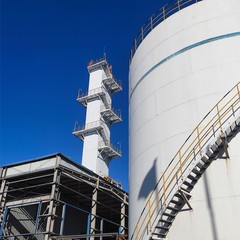



CO₂ Recovery Unit for By-product Gas From Petrochemical Plants
Introduction
The CO₂ recovery unit for by-product gas in petrochemical plants is a system that collects, purifies, purifies, and liquefies process exhaust gases rich in carbon dioxide generated during petrochemical production, such as hydrogen production unit gas, catalytic cracking flue gas, synthetic ammonia decarbonization gas, and ethylene oxide production exhaust gas. Its core value lies in converting industrial by-products into high-purity commercial carbon dioxide or raw materials for production, achieving the recycling of carbon resources.

Compared with bio based CO₂ recovery in breweries, the characteristics and advantages of petrochemical by-product gas recovery devices are:
Outstanding Ability To Handle Complex Gases
For complex gas sources with high sulfur, high hydrocarbons, and oxygen content, we have mature pretreatment and deep purification technologies (such as special adsorption and catalytic oxidation), which can stably produce high-purity products.
Significant Economies Of Scale
The petrochemical by-product gas volume is large and continuous, and the equipment is usually large in scale (processing capacity can reach several tons to tens of tons per hour), with low unit recovery costs and significant economies of scale.
Deep Integration With The Main Process
Its operation is closely coupled with the upstream petrochemical main unit, which can achieve energy integration (such as utilizing waste heat) and improve the overall energy efficiency of the plant.
High Environmental Protection And Strategic Value
It is one of the iconic technologies for achieving green and low-carbon transformation in the petrochemical industry.
Parameter Specifications
|
processing power |
Raw gas CO₂ concentration |
product purity |
Product form |
Key process pressure |
Core energy consumption indicators |
|
145, 285, 500, 1000 kg/hour, customizable according to needs |
15% – 40% (v/v) |
≥ 99.5% (industrial grade) or ≥ 99.9% (food grade) |
Liquid, stored in atmospheric and low-temperature (-20 ℃) storage tanks |
Absorption tower pressure: 0.8-2.5 MPa (G) |
• Regenerated steam consumption:~1.2-1.8 tons of steam per ton of liquid CO₂ • Comprehensive electricity consumption:~80-150 kWh/ton of liquid CO₂g. |
(For Reference Only)
Important constituent units and associated parameters
- Preprocessing and Compression Unit
Compressor outlet pressure: It needs to be matched with the optimal operating pressure range of the subsequent absorption tower.
- Core purification and separation unit (taking amine method as an example)
The size of the absorption tower/regeneration tower is determined by the processing gas volume, CO₂ partial pressure, and amine liquid circulation volume.
Selection and concentration of amine solution: MDEA (methyl diethanolamine) or its formula solution is commonly used, with a concentration usually ranging from 30% to 50% wt, which affects absorption capacity and energy consumption.
- Dehydration and liquefaction unit
Dew point after drying: It should be ≤ -60 ℃ to prevent ice blockage in liquefaction pipelines.
Liquefaction temperature and pressure: typically liquefies at -20 ℃~-25 ℃ and 2.0-2.5 MPa, balancing energy consumption and equipment investment.
Main function
In petrochemical plants, this device plays multiple strategic roles:
Resource utilization and efficiency improvement
Recovering CO₂ exhaust gas that was originally released or burned into valuable products that can be sold directly or used as downstream chemical raw materials (such as for producing dry ice, carbonated beverages, urea, methanol, etc.), creating new profit points.
01
Internal circulation and raw material substitution
The recovered pure CO₂ can be reused in our factory's EOR, methanol synthesis, carbonate production and other processes, replacing external purchases and reducing raw material costs.
02
Emission Reduction and Compliance
Significantly reduce greenhouse gas emissions from factories, help companies meet carbon emission quota requirements under the "dual carbon" target, reduce carbon tax expenditures, and can be developed into CCUS (Carbon Capture, Utilization, and Storage) projects to obtain potential policy support or carbon sequestration benefits.
03
Improving the efficiency of the main device
By efficiently removing CO₂ from the exhaust gas, the reaction balance of the front-end main process (such as hydrogen production) can be optimized, and the yield and purity of the main product can be increased.
04
Hot Tags: co₂ recovery unit for by-product gas from petrochemical plants, China co₂ recovery unit for by-product gas from petrochemical plants manufacturers, suppliers, factory, industrial by product gas recovery unit, CO Recovery Unit for By product Gas From Petrochemical Plants, PSA Exhaust CO Recovery Device, CO Recovery Unit for Brewery Fermentation Gas
You Might Also Like


Send Inquiry