



Introduction to Air Separation Equipment
Mar 01, 2026
Leave a message
Air separation equipment utilizes atmospheric air as its raw material; through a process involving compression cycles and deep cryogenic refrigeration, it liquefies the air, subsequently employing rectification to progressively separate and produce gases such as oxygen, nitrogen, and inert gases like argon.
This equipment employs various technological pathways-including cryogenic rectification, adsorption, and membrane separation-among which the cryogenic method stands as the mainstream process due to its capacity for high product purity and large-scale production. In 2026, Hangyang Group secured a contract for a nitrogen production equipment project in West Africa; the group also undertook the construction of Xinjiang's first large-scale BOO (Build-Own-Operate) gas supply project, with companies such as China Air Separation and Henan Kaiyuan Air Separation participating in the provision of supporting equipment and applications.
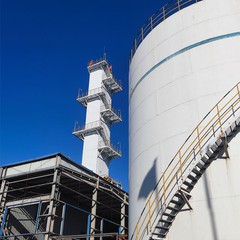
The core components of the equipment comprise a compression system, a purification system, a rectification tower system, and a heat exchange system, incorporating critical components such as self-cleaning air filters, steam turbines, and air compressors. The rectification tower facilitates the separation of oxygen and nitrogen; the cold box skid for the main tower can weigh up to 125 tons, necessitating installation precision controlled within the millimeter range. The JB/T 15153-2025 standard introduced, for the first time, a methodology for evaluating the energy consumption of air separation equipment utilizing the cold energy of LNG, thereby enabling a reduction in operational energy consumption of over 50%. Hangyang has successfully achieved domestic substitution for core components-such as its independently developed high-pressure plate-fin heat exchangers and 80,000-class air separation compressor units-while Henan Kaiyuan Air Separation has developed a condenser load control device for crude argon towers that enhances operational stability through precise flow regulation.
Send Inquiry