

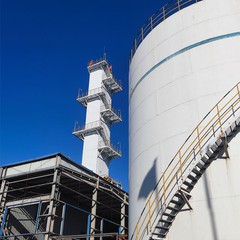


Design Philosophy Of Air Separation Units
Feb 09, 2026
Leave a message
The design philosophy behind air separation units revolves around five core principles: safety, efficiency, economy, reliability, and intelligence. Its objective is to achieve the high-purity separation of air components while simultaneously prioritizing energy consumption control, operational stability, and ease of operation.
Safety First
Employs an "internal compression of liquid oxygen" process to eliminate the fire hazards associated with external oxygen compressors.The main condenser features a "bath-type structure" with "full-immersion operation," which increases the liquid oxygen circulation ratio and prevents the precipitation of hydrocarbons on heat exchange surfaces-a potential trigger for explosions.
Handwheels are strictly prohibited on critical valves (such as oxygen control valves); manual valves are situated behind blast walls to ensure operational safety.
High Efficiency and Energy Conservation
Utilizes high-efficiency turbo-expanders with boosters, achieving a refrigeration efficiency exceeding 85% and recovering expansion work to reduce overall system energy consumption.
The heat exchange system features an optimized design with multi-stream thermal integration to maximize cold recovery; large-scale units employ a configuration with separate high- and low-pressure heat exchangers to strike a balance between capital investment and energy efficiency.
Promotes the adoption of variable frequency drives and intelligent start-stop systems (such as the OKS 3.0 "One-Touch Start" system) to adapt to power grid fluctuations and enhance operational flexibility.
Send Inquiry