


Recent Updates On Air Separation And CO2 Recovery Projects in China And Abroad
Jul 02, 2026
Leave a message
Recent Updates on Air Separation and CO2 Recovery Projects in China and Abroad
1. Air Separation Unit
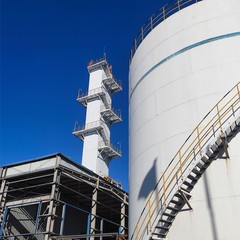
On July 1, news broke that the first phase of the 15 million tons/year coal clean and efficient conversion demonstration project with quality separation by Shaanxi Coal Group's Yulin Chemical Co., Ltd. recently completed the topping of its initial air separation unit cryogenic box. The air separation unit was contracted by Hualu Engineering Co., Ltd. of China National Chemical Engineering Group, with a total cryogenic box height of 60 meters. The internal equipment and pipelines must operate under deep cryogenic conditions of minus 196 degrees Celsius for extended periods. The project plans to construct five air separation units of the same production capacity, configured with "3 electric drives + 2 steam drives." The main products include high-pressure oxygen, medium-pressure oxygen, and low-pressure nitrogen.
At the same time, Zambia United Capital's 300,000-ton/year fertilizer project-the first modern urea project in East and Southern Africa-has been fully operational for a full month. Located in Lusaka, Zambia's capital, the project's air separation and compression unit is supplied by domestic equipment manufacturers. Since commissioning, it has operated smoothly and reliably, with all performance metrics meeting design standards. Facing Zambia's complex operating environment, including high altitude, arid climate, and power fluctuations, the unit employs fully autonomous advanced aerodynamic design and intelligent control technology to maintain stable efficiency under a wide range of working conditions.
Additionally, a domestic gas company's project involving the construction of an annual production capacity of 420 million standard cubic meters of industrial gases and 8,880 standard cubic meters of specialty gases has completed the filing and approval process in late June. With a total investment of 147 million yuan, the project plans to establish one air separation unit and one krypton-xenon refining unit, laying approximately 10 kilometers of gas pipelines, and is scheduled to commence in July 2026.
2. Carbon Dioxide Recovery Device
Several projects in the carbon capture field have recently made significant progress.
In late June, the world's largest coal-fired power carbon capture demonstration project-the Huadian Zhengning Power Plant Carbon Capture Project in Gansu-completed a 72-hour trial run and officially commenced operations. The project captures 1.5 million tons of carbon dioxide annually, with its technical equipment achieving full domestic production.
During the same period, an energy enterprise is accelerating the installation and commissioning of equipment for a 500,000-ton-per-year carbon dioxide capture retrofit project in the Ganquanbao Economic and Technological Development Zone of Urumqi. The project is expected to commence operations in July 2026. Utilizing waste carbon dioxide gas from methanol scrubbing processes in chemical plants, the project has already established a 300,000-ton-per-year liquid carbon dioxide production capacity. Upon completion, the enterprise's annual carbon dioxide production capacity will surge from 300,000 tons to 800,000 tons. Another company in the zone is also about to initiate a liquid carbon dioxide retrofit project, which will expand the production capacity by 300,000 tons of liquid carbon dioxide within the year, enabling an annual output of 360,000 tons of liquid carbon dioxide.
On the international front, U.S.-based BKV announced on June 30 that its Eagle Ford carbon capture and storage facility has successfully commenced operations. The facility captures carbon dioxide from a natural gas processing plant, compresses it, and transports it to nearby injection wells for permanent geological storage, with an estimated annual sequestration capacity of approximately 90,000 metric tons of CO2. Together with the previously operational Barnett Zero and Cotton Cove facilities, BKV has deployed three commercial carbon storage facilities by the first half of 2026.
Send Inquiry