

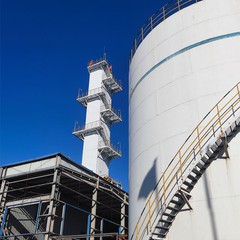


Self-cleaning Air Filter
Introduction
Self-cleaning air filters are key pre-purification devices installed at the inlet of the air compressor in large-scale air separation units. They automatically and continuously remove dust, particulate matter, and other solid impurities from the intake air, providing clean air for the compressor. They are a standard feature in modern large-scale air separation systems.

Its role in air separation units
Protecting core rotating equipment
Effectively removes dust from the air, preventing wear and corrosion of the high-speed rotating air compressor blades and internal flow channels, extending the life of the main unit, and maintaining operational efficiency.
Reducing downstream load
Reducing the amount of dust entering the system significantly reduces the burden on subsequent air precooling and molecular sieve purification systems, lowering the risk of blockage and maintenance frequency.
Ensuring overall stability
Clean and stable intake air is the foundation for the smooth operation of the air compressor, helping to ensure continuous and reliable production of the entire air separation unit.
Parameter
|
Rated air volume |
Filtration accuracy |
initial pressure drop |
Number of filter elements |
Self-cleaning method |
Control method |
|
Thousands to hundreds of thousands of m³/h |
≤ 2 μm |
≤ 200 Pa |
A few to hundreds |
Pulse jet (mainstream) |
Differential pressure control or timed control |
(For Reference Only)
Main Components
- Filter Element (Core): Typically made of pleated filter paper using polyester fiber, wood pulp fiber, or composite glass fiber, possessing high dust holding capacity and a certain degree of water resistance.
- Filter Cartridge/Housing: Mostly carbon steel (with powder-coated anti-corrosion surface) or stainless steel (for humid and corrosive environments), used to house and protect the filter element.
- Pulse-Blow System: Includes electromagnetic pulse valves, blow pipes, and compressed air tanks, generally made of aluminum alloy, copper, or stainless steel.
- Control System: Consists of differential pressure sensors/transmitters, PLC control units, and electrical components.
- Clean Air Chamber and Frame: Usually a carbon steel structure; the inner wall of the clean air chamber must be smooth to prevent secondary dust accumulation.
Other Major Application Industries
Iron and Steel Metallurgy
Provides filtration for blast furnace blowers and large air compressors.
01
Power Industry
Used for intake air filtration in gas turbines and large boilers.
02
Chemical and Pharmaceutical Industries
Provides clean intake air for process air compressors.
03
Cement and Building Materials Industries
Protects critical fans and compressors in dusty environments.
04
Air Separation Industry
A core application scenario, providing the first line of protection for air compressors.
05
Advantages
- Automatic operation and convenient maintenance: Automatic pulse backflushing cleans the filter element via differential pressure sensing or timed control, eliminating the need for shutdown or manual cleaning, minimizing maintenance workload.
- Stable operating resistance and energy saving: Maintains relatively constant filtration resistance (pressure drop), preventing increased intake pressure loss due to filter clogging, contributing to stable and energy-efficient compressor operation.
- High and stable filtration efficiency: Utilizes high-efficiency filter media, maintaining high filtration efficiency over a long period, ensuring intake air cleanliness.
- Strong adaptability: Capable of handling different ambient air qualities and certain levels of humidity.
- Long service life: Under normal maintenance, the core filter element has a service life of 1-2 years or longer.
Hot Tags: self-cleaning air filter, China self-cleaning air filter manufacturers, suppliers, factory, Self cleaning Air Filter, Molecular Sieve Purification System, purification system
You Might Also Like


Send Inquiry