



Food-grade CO₂ Liquefaction Equipment
Introduction
The food grade CO₂ liquefaction device is a specialized equipment that converts high-purity CO₂ gas purified by front-end purification into low-temperature liquid products through refrigeration and compression. It is the final critical process in the CO₂ recovery process, which directly determines the form of the final product, the economy of storage and transportation, and the market value.

Basic operating principle
Its core is a process of physical refrigeration and compression phase transition, which does not involve chemical reactions:
Gas pretreatment and compression
High purity, dry CO₂ gas from the front-end purification system (such as brewing recovery, petrochemical recovery) is first compressed to liquefaction pressure (usually 1.6-2.5 MPa) by an oil-free compressor.
Pre cooling and purification
The compressed high-temperature gas is cooled by a cooler and may undergo final purification through activated carbon adsorbers to ensure no residual odors.
Deep refrigeration and liquefaction
The gas enters the main liquefier (usually a shell and tube or plate fin heat exchanger) and exchanges heat with refrigerants (such as R744, ammonia, and Freon). The temperature drops to -20 °C to -25 °C. At this temperature and pressure, CO₂ undergoes a phase change and liquefies.
Flash evaporation and storage
Liquefied CO₂ enters the flash evaporation tank through a throttle valve, releasing a small amount of non condensable gas (such as residual N₂, O₂), and finally obtaining high-purity liquid CO₂, which is transported to an insulated storage tank for storage.
Parameter Specifications
|
Processing power |
Liquefaction pressure |
Liquefaction temperature |
product purity |
Key energy consumption indicators |
Final product form |
|
100 – 10,000 kg/h |
1.6 –2.5 MPa(G) |
-20℃ ~ -25℃ |
≥99.9% (v/v) |
Electricity consumption for liquefaction: 80-150 kWh/ton of liquid CO₂ |
Atmospheric pressure low-temperature liquid |
(For Reference Only)
The economic benefits that can be brought
Value enhancement benefits
1. Product form premium: Liquid CO₂ is easy to sell and transport, and its commodity value is much higher than that of gas. Food grade liquid CO₂ can be sold 50% -100% higher than industrial grade gases.
2. Market flexibility: Liquid products can be conveniently supplied to geographically dispersed small and medium-sized customers (such as beverage and food factories), expanding the sales radius.
Cost saving benefits
1. Significantly reduce transportation costs: Under the same weight, the transportation cost of liquid tank trucks is only one-third to one-half of that of high-pressure gas bundle trucks.
2. Reduce storage costs: The unit storage cost of large low-temperature liquid storage tanks is much lower than that of high-pressure gas storage tanks.
Main components
Gas compression module
① Oil free lubricated compressor: Ensuring that the gas is not contaminated by lubricating oil is crucial for food grade production.
② Inter stage cooler and separator.
01
Purification and drying module
① Precision filter: removes particles.
② Adsorption dryer (such as molecular sieve): Ensure that the dew point of the intake air is ≤ -60 ℃ to prevent ice blockage.
02
Refrigeration and liquefaction module (core)
① Refrigeration compressor: provides power for the refrigeration cycle.
② Main liquefaction heat exchanger: the core location where CO₂ gas undergoes phase change in heat exchange with refrigerant.
③ Throttle valve and flash tank: used for pressure reduction and removal of non condensable gases.
03
Storage and filling module
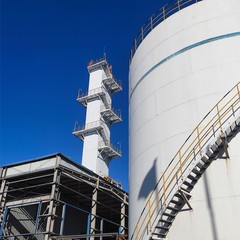
① Liquid CO₂ storage tank: vacuum powder insulation to maintain low temperature.
② Filling pump and metering system: used for filling tank trucks or steel cylinders.
04
Control and Safety Module
① Automatic control system: regulate pressure, temperature, and liquid level.
② Safety valves and rupture discs: ensure overpressure safety.
05
Hot Tags: food-grade co₂ liquefaction equipment, China food-grade co₂ liquefaction equipment manufacturers, suppliers, factory, Food grade CO Liquefaction Equipment, Polyurethane Foam Insulated LCO Storage Tank, CO Cylinder Filling Unit, Vacuum Insulated LCO Storage Tank, liquefaction storage equipment
You Might Also Like


Send Inquiry